Essay record
With AI, Your Imagination is the Limit
- Record
- Essay / / 5 min read / 1,444 words
On this page5 sections / +
DISCLOSURE: Some links may be affiliate links. Details
I've been pretty vocal about my move towards AI-native creation. I wouldn't say I'm an early adopter and I'm certainly not pushing the boundaries of what AI is capable of but I do like to keep tabs on where the industry is going and I'm currently of the mind that AI is the present and future of most knowledge work.
My reasoning for this is simple:
- Implementation was a major bottleneck in most domains of knowledge work
- AIs commoditize implementation via always-on agents and mass parallelism
So if we take this as true (if not now then in the next 3-5 years) then I believe the true limit of what we can achieve rises to that of our imagination and the direction we set to get there. And as someone who has gone from writing 100% of my code to 0% in the last 2 years, I think we're there already.
Some recent examples of things I've seen / done that break the boundaries of what would be feasible to do / build even 3 years ago (whether due to scope, time, human power, technical complexity):
Spiderman Game Benchmark
Third iteration with Opus 5.5 medium.
— Shikhar (@xikhar) September 27, 2026
I am in awe. It turned blender, image-gen, and three.js into this beauty, which runs on your browser.
An understatement to say that Anthropic cooked. You are looking at the future of game dev. pic.twitter.com/ht2s8rpwO3
An indie dev created a Spiderman game in a couple days complete with web slinging, building running, full scale city models, and traffic simulations.
Before it would've taken some acute unfair advantages to build this, impossible in a matter of days:
- A background in game engines + 3d modeling
- Likely months of actual build out
But now can do it in a couple days.
And this is not an isolated occurrence. Take a look at r/aigamedev and the scope in terms of visual quality and game mechanics are very impressive, esp when mostly coming from people making their first forays into the field.
EDIT: a few more threads for inspo:
- A vibe coded Zelda Breath of the Wild clone from a father collaborating with his 2 kids - https://x.com/DannyLimanseta/status/2104215873120764032
- A thread of impressive Opus 5.5 builds, mostly visual renders - https://x.com/claudeai/status/2103515655760982273
DHH's OMARCHY Linux Distro
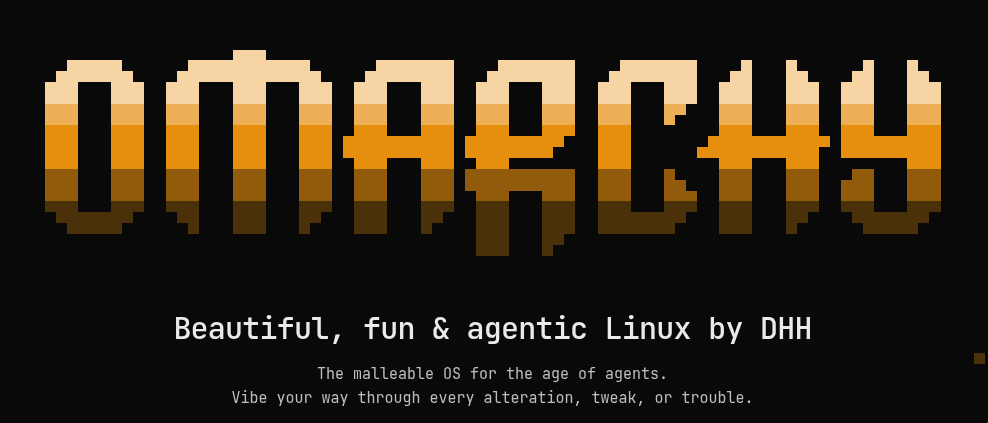
DHH decided to ~single-handedly build his own Linux distro. It's taken many months to get here but to even get that far and be stable enough to get decent usage would have been unthinkable 3 years ago without years of development. Granted a lot of this is built on top of the Arch Linux foundations which themselves took many thousands of human years to complete but even forked distros are a lot of work to maintain.
Before it would've taken:
- Deep understanding of Linux internals - drivers, packaging / installs, window managers
- Likely lots of industry experience with low level languages like bash and C++ to even start developing
- Years of available human power to iterate on this
Instead DHH built it in ~1 month month with a minimal team and arguably was the catalyst for ushering in the year of the linux desktop.
I've personally felt AI allowed me to finally feel at home with Linux (Fedora Sway btw) because I didn't have to parse through the cryptic docs of dozens of niche tools to fix a simple issue or configure my computer to work a certain way. Now I can just query AI and we can find a way to make it happen within the systems and guardrails I've already setup.
A Personal Simulation
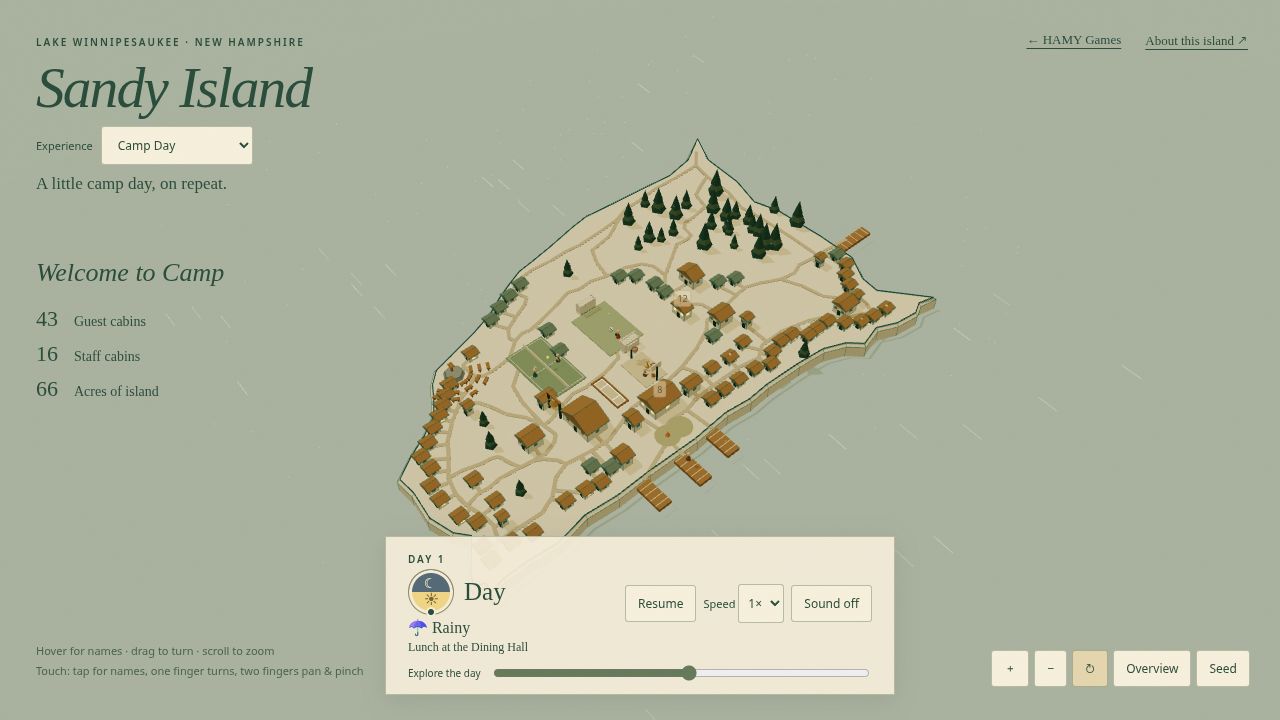
I had some downtime at my friend's wedding weekend and wanted to play with simulations so I built a little simulation of the island we were on and my imagined version of how the camp operated. I did this in a few hours over a couple days when I had time inbetween activities and on the plane back.
Before this would've required:
- Likely a week of focused time
- Background in the technology (three.js) and 3d modeling
- Some background in simulations and likely some boilerplates / templates I could kickstart my project with (much like I do with CloudSeed for webapps)
This one is definitely doable for someone dedicated to it. But as a 3h project?
- Feasible yes.
- Practical no.
And I'm personally very excited about restarting my creative technology practice and seeing where the field goes now that it's not gated behind so much time and expertise.
Your Imagination is the Limit
Where I'm going with all this is that the landscape of creation has changed.
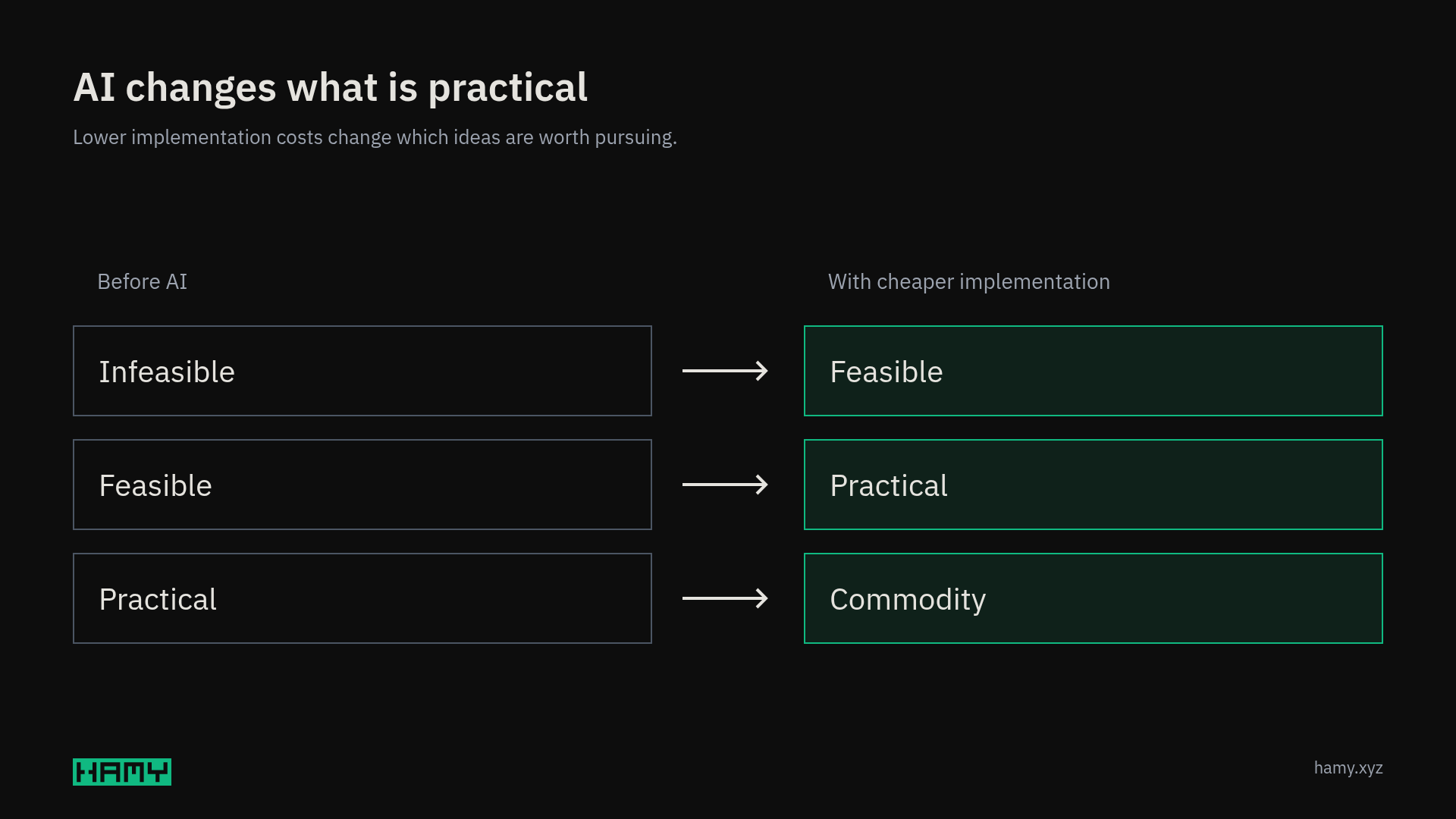
AI has moved the boundaries of what's feasible:
- infeasible -> feasible
- feasible -> practical
- practical -> commodity
Impossible things are still impossible (until we determine otherwise). But most things aren't actually impossible just infeasible with the available resources and AI has taken a massive chunk out of that pie.
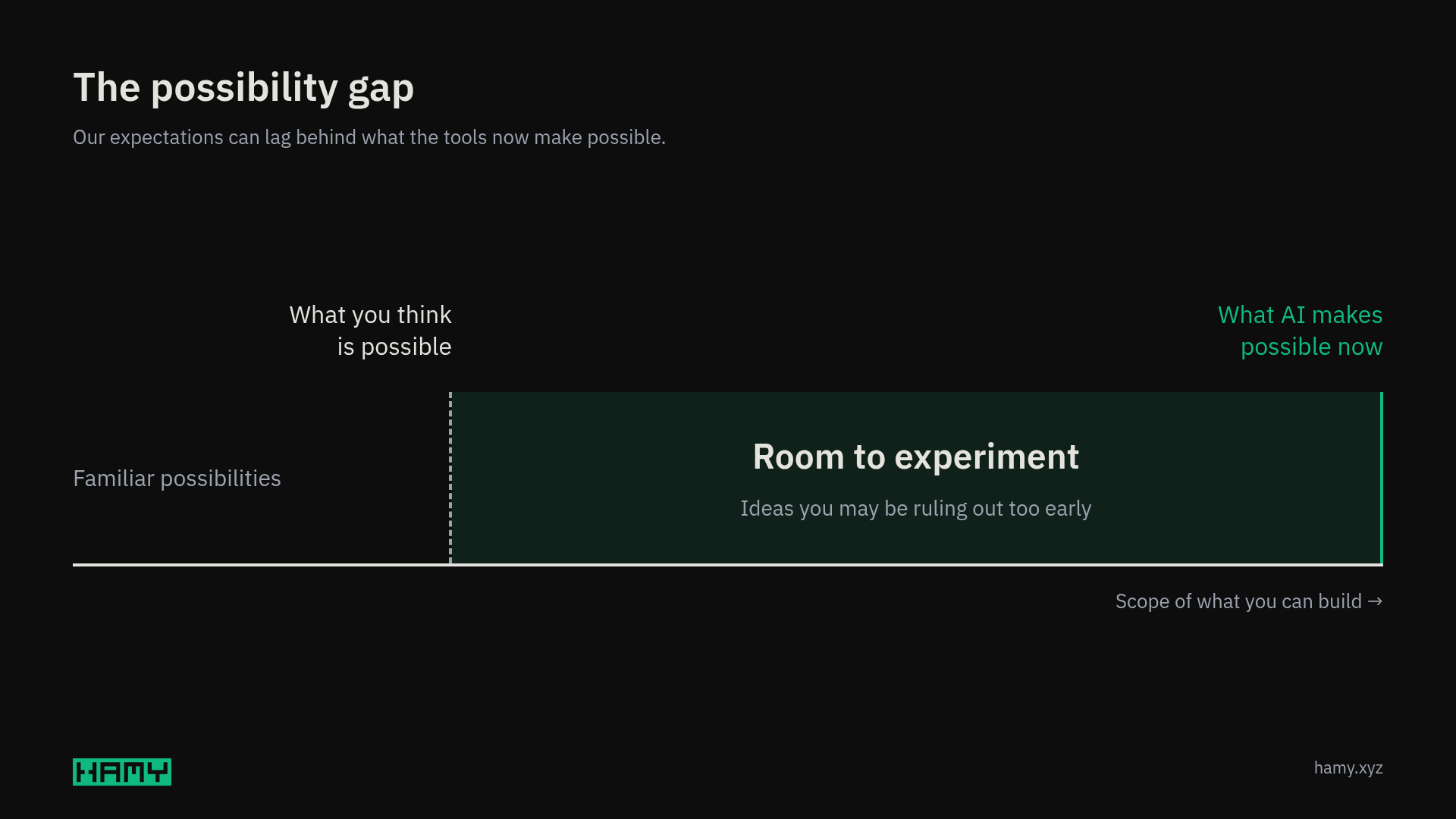
Our implementation bounds have been extended far past what our recent past experiences have informed us of. So there's likely a gap between what we think AI / we are capable of and what the current reality of the technologies can achieve.
This is both opportunity and risk.
- An opportunity to be a first mover in this gap, to capture people's attention, wonder, and perhaps money before the mainstream catches up
- A risk that if you continue playing by the old bar, you'll be left far behind the current standard
Personally I'm trying to challenge myself to be more ambitious and to experiment with what the future could hold / look like if I dropped a lot of my old concepts of what creation looks like.
- What does good look like when AI can produce old "good" with ~zero effort?
- What remains useful from old practices vs what's likely holding us back?
- What's even the edge of feasible now that we have AI? What if it got way cheaper / faster? What if everyone used AI?
- What does AI-native look like? What interfaces and routines remain?
- How would the daily life of "normies" like my parents change if they went AI-native? What does that mean for products and media?
I don't have the answers but the rate of breaking these boundaries continues to speed along and I think these questions are more important than ever.
Next
To be clear, I don't want this to read like a doomer post. I'm personally very hopeful about the future with AI - it's fun and freeing in so many ways.
But I also think it's important to be realistic about where we are and where we're likely going. And I don't really see a path other than AI-native. The biggest hurdle seems to be cost but my bet is this will go the way of computers and internet and get much better / cheaper over the coming years.
Thus the pragmatic approach is to think ab where we're going and prepare for that likely future.
The way I'm thinking ab doing this is:
- Treat everything like an experiment - it's a whole new landscape so we need to test everything again, including long-held assumptions
- Push the boundaries of what I think is possible - it's likely I have lots of concepts built over decades of life that are just no longer true from approaches to limitations to concepts of what "x" is
- Remain positive - The speed of change is overwhelming but giving into despair is defeatist. The best way forward is to accept what you can't change and focus on what you can.
If you're curious about my approach to agentic engineering, you can read this post and haminions members have access to my full ai dotfiles.
If you liked this post you might also like: